
|
Do it yourself
| |||
| ||||


Let's debunk seven myths about motor oil
Model: (Various brands) Various
In this video we will debunk some myths about motor oil: motor oil is used to prevent the moving parts of the engine from overheating and being able to work together effectively, but over time the oil deteriorates, that's why it is necessary to change it periodically. But there are various types of oil; which one is suitable for us? Mineral oil is derived from petroleum and is used in cars with simple engines and drivers with a conservative driving style; it is less refined than other types, and offers a rather low level of protection. Synthetic oil is chemically designed and is more durable and much more refined, but also much more expensive; semi-synthetic oil is a combination of the two; high mileage oils are enriched with specific additives to reduce combustion and improve the performance of older cars. Oil can be differently viscous, that is, more or less dense; to know which viscosity our engine needs, we must refer to the owner's manual of our car, and adhere to those instructions, but we must adapt it to the place where we live: for example, the 0W30 label indicates the parameter of the temperature at which the oil flows in winter 0W and 30 in summer: it is therefore an oil suitable for cold climates: a 10W40 is instead suitable for hot climates. If we live in a cold climate and the oil is too viscous, it will be difficult to start the car in the middle of winter. New standards have been approved called LSPI referring to turbo engines. The GF6A concerns existing cars and covers API viscosities from 0W20 to 10W40; The GF6B instead concerns new cars with direct injection. When we buy oil, we make sure it has the approval mark on the container. The frequency of oil changes depends on many factors: newer cars are equipped with a monitoring system, but it is likely that it will need to be changed sooner depending on where you live. If we smell burnt oil or see exhaust smoke coming out of the tailpipe, or if we hear strange noises coming from the engine, do not hesitate to take the car to the workshop; we probably have a leak. Oil that is too thick, on a new car, can reduce engine efficiency and increase fuel consumption. As for additives, these have different purposes depending on their use, so they must be chosen carefully depending on the use and the car they are intended for. It is also important to remember that every time you change the oil, you should also change the filter, which is designed to last the oil's life cycle.
Posted on 22 April 2024 by ScegliAuto
Video tutorial
Related tutorials
(Various brands) Various
In this video, four myths about Start & Stop are debunked: the first is that this function drains the battery, as the battery designed for this funct…

(Various brands) Various
The first myth about automatic transmission oil is that "it never needs to be replaced". False! Heat degrades the oil, which over time fills with met…

(Various brands) Various
Before a car trip, it is good to check the amount of motor oil present in the oil tank. To verify the quantity, we must open the hood and then lift t…
Other guides you may be interested in
|
Frequently Asked QuestionsHow to Open a Stuck Boot on the Peugeot 407?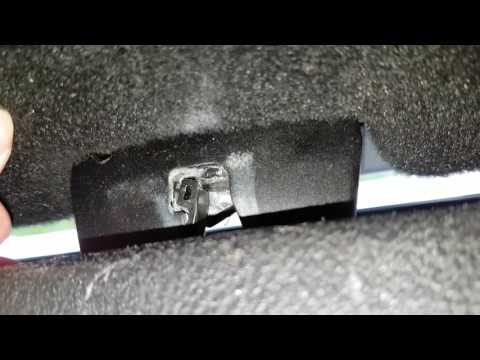
On the Peugeot 407, the boot may become stuck, possibly due to a problem with the control button or the lock actuator. In such cases, you can perform an emergency opening by following the simple procedure shown in this tutorial. First, open the rear doors, then lower the seat back by operating the release lever. Next, go inside the boot, locate the lock, and manually operate it using a flathead screwdriver. The boot will then be free to open. by ScegliAuto More videos
|
|
For advertising on this site Write to info@scegliauto.com
ScegliAuto is not responsible for any inaccuracy of the data in the lists. To report any inaccuracy or your business (if you own the business in question), please write to info@scegliauto.com
Number of seconds to generate the page: 0.451
(c) ScegliAuto 2026 - info@scegliauto.com - Privacy policy VAT number: IT01247470535 |
