
|
Do it yourself
| |||
| ||||


Where are the fuses located in the Renault Megane?
Model: Renault Megane
Megane 3, Megane III
- Years 2008-2015
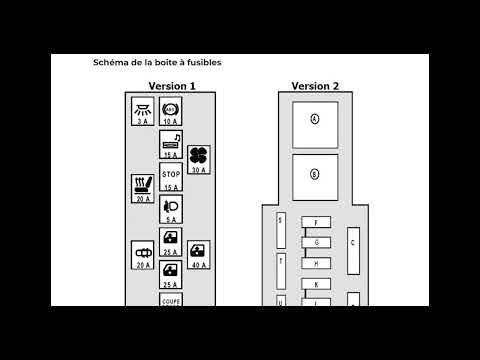
Each fuse in the Renault Megane is responsible for regulating the operation of a device installed on board the vehicle: the fuses will in turn be positioned inside the appropriate boxes that perform this function. On the Renault Megane, it will be possible to identify a single box designed for containing the fuses: this will be located in the lower left part of the dashboard in relation to the steering column. This box contains the fuses that regulate the operation of the courtesy lights, the instrument panel, the air conditioning, etc. To replace a fuse, you will need to insert a new one with the same amperage.
Posted on 3 June 2025 by ScegliAuto
Video tutorial
Related tutorials
Renault Megane
(2008-2015 /
Megane 3, Megane III)
The operation of the devices installed on the Renault Megane is managed by the fuses located inside the appropriate boxes. In this car model, it will…
Renault Megane
(2002-2010 /
Megane 2)
The fuses of the Renault Megane 2 are divided inside the appropriate fuse boxes that are installed on the vehicle: in this car model, there are two f…

Renault Megane
(2008-2015 /
Megane 3, Megane III)
The fuses of the Renault Megane are divided into the appropriate fuse boxes that are installed in the vehicle: in this car model, it is possible to i…
Other guides you may be interested in
|
Installation of Upgraded Intercooler Radiator with Pipes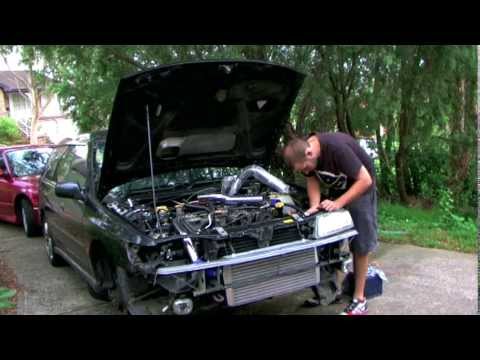
Lift the vehicle on suitable axle stands, remove the front wheels, and then the front bumper and grille. Proceed to remove the front headlights; drain the coolant, remove the intercooler radiator and the hoses connecting it to the intake system. Position the new intercooler radiator in the grille, temporarily securing it with cable ties, and mark with a marker the part of the metal that needs to be removed to allow the new hoses to pass through. Cut the marked portion of metal and apply a gasket to the edge. Remove the inner cover of the bumper and position it near the radiator to identify any interfering parts to eliminate: again, apply a gasket to the edge of the cut. Create brackets for securing the new radiator and proceed with the installation of the connecting pipes from the radiator to the intake, shaping and connecting them appropriately. Finally, reassemble the bumper, headlights, and grille. by ScegliAuto More videos
|
|
For advertising on this site Write to info@scegliauto.com
ScegliAuto is not responsible for any inaccuracy of the data in the lists. To report any inaccuracy or your business (if you own the business in question), please write to info@scegliauto.com
Number of seconds to generate the page: 0.052
(c) ScegliAuto 2026 - info@scegliauto.com - Privacy policy VAT number: IT01247470535 |
