
|
Do it yourself
| |||
| ||||


Dismantling and Cleaning the EGR Valve
Model: Honda Civic
MK 7
- Years 2001-2006
The EGR valve is exposed to exhaust gases that generally contain oil particles and unburnt diesel, which tend to clog the valve: therefore, a simple cleaning can restore its function. It is also advisable to clean the manifold to which the valve is connected, as combustion residues can also clog the manifold itself. For the vehicle in question, dismantling the valve is very straightforward: it is located at the front of the engine, and you only need to remove the plastic cover to access the fastening pins. Additionally, the manifold has a sort of cap, making dismantling and cleaning very easy to perform. Once the manifold cap and the EGR valve are removed, use brake cleaner to carry out the cleaning.
Updated on 9 February 2026 by ScegliAuto
Video tutorial
Related tutorials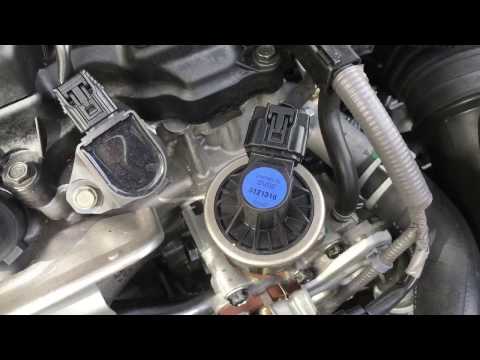
Honda Civic
(2006-2012 /
MK 8)
Damaged EGR valve? Let's see the replacement in the Honda Civic. Lift the bonnet and put it in safety, then, with a socket wrench, unscrew the lockin…
Honda Civic
(1995-2001 /
MK 6)
This video shows how to perform a basic cleaning of the internal engine components and injectors worn from use and time. First, obtain the suitable p…

Honda Civic
(2006-2012 /
MK 8)
In this tutorial we can see how to disassemble the EGR valve in the Honda Civic, an extremely simple and quick operation. First of all, make sure tha…
Other guides you may be interested in
|
Installation of Upgraded Intercooler Radiator with Pipes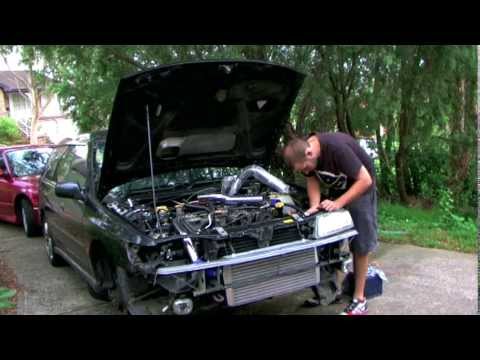
Lift the vehicle on suitable axle stands, remove the front wheels, and then the front bumper and grille. Proceed to remove the front headlights; drain the coolant, remove the intercooler radiator and the hoses connecting it to the intake system. Position the new intercooler radiator in the grille, temporarily securing it with cable ties, and mark with a marker the part of the metal that needs to be removed to allow the new hoses to pass through. Cut the marked portion of metal and apply a gasket to the edge. Remove the inner cover of the bumper and position it near the radiator to identify any interfering parts to eliminate: again, apply a gasket to the edge of the cut. Create brackets for securing the new radiator and proceed with the installation of the connecting pipes from the radiator to the intake, shaping and connecting them appropriately. Finally, reassemble the bumper, headlights, and grille. by ScegliAuto More videos
|
|
For advertising on this site Write to info@scegliauto.com
ScegliAuto is not responsible for any inaccuracy of the data in the lists. To report any inaccuracy or your business (if you own the business in question), please write to info@scegliauto.com
Number of seconds to generate the page: 0.055
(c) ScegliAuto 2026 - info@scegliauto.com - Privacy policy VAT number: IT01247470535 |
