
|
Do it yourself
| |||
| ||||


Cylinder Head Gasket Replacement
Model: Vauxhall Astra
Astra G
- Years:
1998, 1999, 2000, 2001, 2002, 2003, 2004, 2005, 2006
Video tutorial
When replacing the cylinder head gasket, it is always advisable to have the cylinder head machined to eliminate any warping caused by overheating. In any case, after machining, ensure the surface is perfectly flat using a ground bar and a feeler gauge for valves. Proceed with the installation of the turbocharger manifold and the exhaust manifold, inserting new studs and gaskets; likewise, install the lubrication duct for the variable geometry of the turbocharger; then attach the complete manifold with the turbocharger to the cylinder head. Repeat the flatness check on the cylinder block, re-tap the threads of the cylinder head fixing holes, check the position of the pistons relative to the surface of the block, and install the new cylinder head gasket and then the cylinder head itself using a new set of fixing studs (follow the cross pattern using both the torque wrench and the graduated wrench). Complete the installation of the intake manifold, the rocker cover, and the turbo accessories.
Updated on 13 February 2026 by ScegliAuto
Related tutorials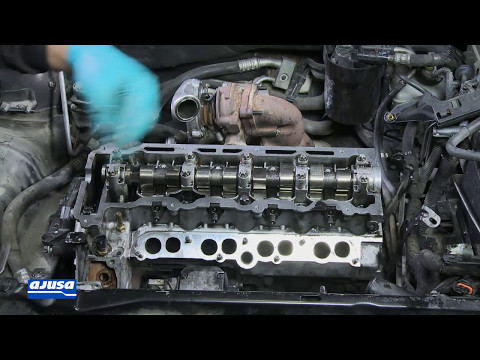
Vauxhall Astra
(1998-2006 /
Astra G)
The following guide shows how to replace the cylinder head gasket. These components prevent the vehicle from overheating, thereby avoiding damage to …

Vauxhall Astra
(1998-2006 /
Astra G)
Before installing the new cylinder head gasket, it is essential to check that the previous overheating has not warped the surfaces of both the cylind…

Vauxhall Astra
(1998-2006 /
Astra G)
The head gasket is placed between the cylinder and the cylinder head and serves to ensure that oil and coolant do not come into contact with each oth…
Other guides you may be interested in
|
How to Reset the Tyre Pressure Warning Light on a Kia Rio?
The tyre pressure warning light displayed on the instrument cluster of the Kia Rio can be reset by inflating the tyres until they reach the recommended pressure value: this value is indicated on the sticker affixed to the driver's door pillar. Once all tyres have been inflated to the recommended pressure, turn on the ignition to check that the light has disappeared: if it is still present, it may be necessary to drive for a few miles, allowing the sensors to work and thus turning off the light. by ScegliAuto More videos
|
|
For advertising on this site Write to info@scegliauto.com
ScegliAuto is not responsible for any inaccuracy of the data in the lists. To report any inaccuracy or your business (if you own the business in question), please write to info@scegliauto.com
Number of seconds to generate the page: 0.024
(c) ScegliAuto 2026 - info@scegliauto.com - Privacy policy VAT number: IT01247470535 |
