
|
Do it yourself
| |||
| ||||


The risk of using non-original parts for the timing belt replacement on an Opel 1.6 CDTi.
Model: Vauxhall Opel Various
In this video, we can hear the whining whistle of an Opel 1.6 CDTi (but also on the twin engines from Peugeot, Citroen, and Fiat) when the timing chain is replaced with non-original kits. This occurs due to the lower tolerances of aftermarket parts, which are often made from cheaper materials, causing this whining noise; the pulleys may not be perfectly identical to the original, leading to abnormal vibrations, and the guides may not have the same rigidity as the originals, wearing out more quickly. The advice, in addition to using original spare parts, is to avoid unknown brands: certainly, a "SKF" will not cause problems. Let's avoid doing this complicated and delicate job ourselves: let's rely on a good mechanic.
Posted on 9 January 2026 by ScegliAuto
Video tutorial
Related tutorials
Vauxhall Opel Various
The video available to us offers a personal evaluation of the Opel engine mentioned. This opinion refers to all models of cars from the manufacturer …
Vauxhall Opel Various
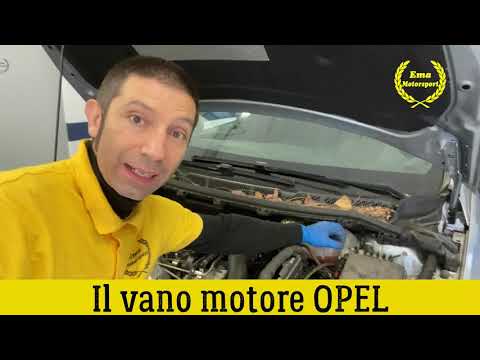
Let's take a look at the engine of the Opel CDTI. Right on the front we find the turbo. On the right side we find the filter box with the air pipe, v…

Vauxhall Opel Various
Today we will explain how to replace the gear shift boot on Opel Astra model G and Opel Zafira model A vehicles. To replace the gear shift boot, you …
Other guides you may be interested in
|
Installation of Upgraded Intercooler Radiator with Pipes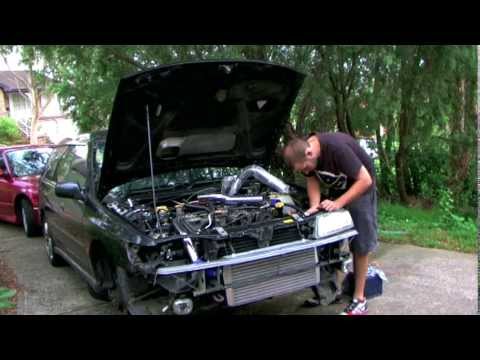
Lift the vehicle on suitable axle stands, remove the front wheels, and then the front bumper and grille. Proceed to remove the front headlights; drain the coolant, remove the intercooler radiator and the hoses connecting it to the intake system. Position the new intercooler radiator in the grille, temporarily securing it with cable ties, and mark with a marker the part of the metal that needs to be removed to allow the new hoses to pass through. Cut the marked portion of metal and apply a gasket to the edge. Remove the inner cover of the bumper and position it near the radiator to identify any interfering parts to eliminate: again, apply a gasket to the edge of the cut. Create brackets for securing the new radiator and proceed with the installation of the connecting pipes from the radiator to the intake, shaping and connecting them appropriately. Finally, reassemble the bumper, headlights, and grille. by ScegliAuto More videos
|
|
For advertising on this site Write to info@scegliauto.com
ScegliAuto is not responsible for any inaccuracy of the data in the lists. To report any inaccuracy or your business (if you own the business in question), please write to info@scegliauto.com
Number of seconds to generate the page: 0.063
(c) ScegliAuto 2026 - info@scegliauto.com - Privacy policy VAT number: IT01247470535 |
