
|
Do it yourself
| |||
| ||||


Adjustment of Camshaft in Cars
Model: Volkswagen Passat
3C, B6
- Years 2005-2010
All types of timing systems have clearances from the valves that allow for the absorption of expansions due to actual heat, which can lead to engine damage. When the timing is direct action, the valves are operated by cup tappets that have calibrated steel shims. These are discs of various thicknesses that are inserted between the camshaft and the tappets. In an indirect action engine, however, the valves are operated by eccentrics connected to finger rockers that can be adjusted by acting on their pivot. Therefore, simply adjust it to achieve optimal settings.
Updated on 14 February 2026 by ScegliAuto
Video tutorial
Related tutorials
Volkswagen Passat
(1996-2005 /
B5, 3BG)
If you notice oil seepage from the rear of the engine, there may be a sealing defect in the cap fitted at the end of the camshaft. To replace this ca…

Volkswagen Passat
(2014-2023 /
B8, MK 8, 3G)
In this brief guide, we will see the main instructions that will allow us to install the head gasket on the Volkswagen Passat 2.0 TDI. First, ensure …
Volkswagen Passat
(2010-2014 /
B7)
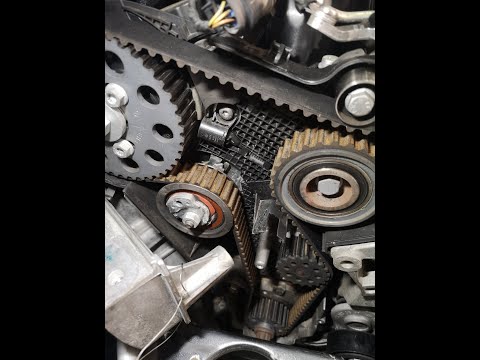
The timing belt synchronizes the operation of the shaft with the camshaft (which regulates the movement of the pistons) and, in some cases, also the …
Other guides you may be interested in
|
Installation of Upgraded Intercooler Radiator with Pipes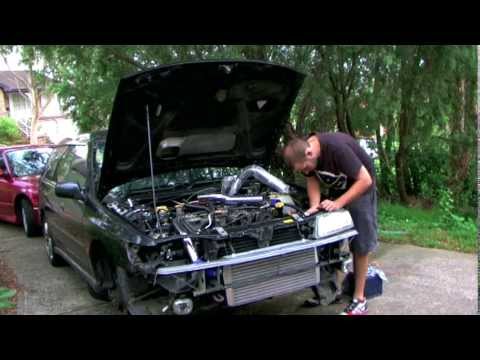
Lift the vehicle on suitable axle stands, remove the front wheels, and then the front bumper and grille. Proceed to remove the front headlights; drain the coolant, remove the intercooler radiator and the hoses connecting it to the intake system. Position the new intercooler radiator in the grille, temporarily securing it with cable ties, and mark with a marker the part of the metal that needs to be removed to allow the new hoses to pass through. Cut the marked portion of metal and apply a gasket to the edge. Remove the inner cover of the bumper and position it near the radiator to identify any interfering parts to eliminate: again, apply a gasket to the edge of the cut. Create brackets for securing the new radiator and proceed with the installation of the connecting pipes from the radiator to the intake, shaping and connecting them appropriately. Finally, reassemble the bumper, headlights, and grille. by ScegliAuto More videos
|

|
For advertising on this site Write to info@scegliauto.com
ScegliAuto is not responsible for any inaccuracy of the data in the lists. To report any inaccuracy or your business (if you own the business in question), please write to info@scegliauto.com
Number of seconds to generate the page: 0.063
(c) ScegliAuto 2026 - info@scegliauto.com - Privacy policy VAT number: IT01247470535 |
